Historical Timeline
Earliest recorded reference to Hallgreen as a fortified structure
Castle passes to the Raitt family through marriage
Significant alterations made during the reign of Charles I
Major restoration work preserves the castle's medieval character
Castle receives Category A listed building status
Hallgreen Castle: A Scottish Stronghold’s Six Centuries of Drama
Origins
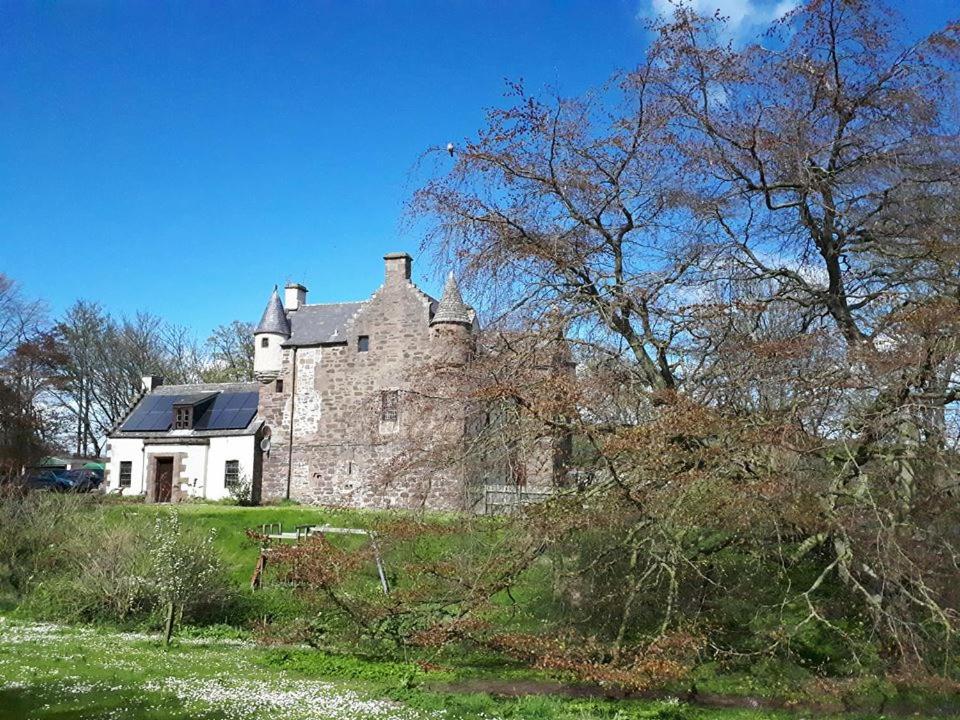
Hallgreen Castle rises from the red sandstone cliffs of the Aberdeenshire coast, approximately one mile north of the fishing town of Inverbervie. The earliest written records mentioning the site date to 1376, though local tradition suggests defensive structures occupied this strategic position even earlier. The castle’s placement was deliberate - positioned to command views of Bervie Bay and the approaches from the North Sea, it served as both residence and watchtower.
The original structure followed the classic Scottish tower house design favoured by lesser nobility during the medieval period. A rectangular main block of four storeys provided the core of the building, with walls thick enough to withstand attack and windows narrow enough to defend. The builders used local stone, giving the castle its distinctive warm colour that contrasts with the grey seas below.
Through the Centuries
The Raitt family acquired Hallgreen in 1483 through marriage, and their tenure would shape much of the castle’s subsequent history. The Raitts were minor landed gentry with connections to the larger political machinations of Scottish noble families. Their ownership coincided with some of Scotland’s most turbulent periods, including the religious conflicts of the Reformation and the civil wars of the 17th century.
During 1639, substantial alterations transformed the medieval tower into something more comfortable for changing tastes. Workers added the distinctive circular stair tower that remains one of Hallgreen’s most recognizable features. New windows brought more light into the upper chambers, while improved fireplaces made the Scottish winters more bearable. The Raitts clearly intended to stay.
The castle changed hands several times over subsequent centuries. Each new owner left their mark, but successive families showed remarkable restraint in preserving the medieval character rather than modernizing completely. By the Victorian era, when many Scottish castles faced demolition or drastic alteration, Hallgreen attracted attention from those who valued its authentic antiquity.
The restoration work of 1893 stabilized structures that had suffered from coastal weather and age. Craftsmen repaired masonry, replaced rotted timbers, and ensured the castle would survive into the 20th century. This careful preservation earned Hallgreen its Category A listed status in 1971, recognizing it as a building of national importance.
Notable Guests and Events
Hallgreen’s position near Inverbervie placed it at the intersection of coastal trade routes and the main road north along Scotland’s eastern seaboard. Travellers of consequence would have sought hospitality here, though detailed guest records from earlier centuries have not survived.
The castle’s most significant historical connection involves the broader political tensions that repeatedly engulfed Scotland. The Raitts, like many Scottish families, navigated the dangerous waters of supporting various monarchical claims. Their relatively modest status provided some protection - they were important enough to matter locally but not prominent enough to attract the devastating attention that destroyed greater houses.
Local records document the castle’s role during the Covenanting period of the 1640s, when religious and political conflict tore Scotland apart. The household’s sympathies during this period remain unclear, but the castle’s survival suggests careful diplomatic positioning.
The Dark History
Death visited Hallgreen repeatedly over the centuries, as it did every residence of this age. Without modern medicine, childbirth, disease, and accident claimed lives within these walls. The thick stone absorbed the grief of generations.
One death, however, left a more lasting impression. Historical accounts reference a young woman connected to the castle whose life ended in circumstances that remain incompletely documented. The details vary depending on the source - some accounts suggest a servant, others a family member of lower status. What appears consistent is the manner of her ending and the location: somewhere within or near the castle’s cliff-side grounds.
Violence of a more deliberate nature also touched Hallgreen. The centuries of clan feuding and political upheaval that characterized Scottish history inevitably reached even this relatively quiet corner of Aberdeenshire. The castle’s defensive features were not merely decorative - they represented real responses to real threats.
Architectural Heritage
Hallgreen Castle today presents an exceptional example of Scottish tower house architecture spanning several building periods. The Category A listing recognizes features including the original medieval tower, the 1639 stair addition, and elements of the 19th-century restoration that used traditional methods and materials.
The circular stair tower contains a turnpike staircase, the spiral design that allowed defenders to fight while ascending with their sword arm free. Arrow slits in the lower levels speak to an era when attack could come with little warning. The upper floors show the transition to more peaceful times, with larger windows oriented to capture both light and the dramatic coastal views.
The castle grounds retain their historic character, including sections of defensive walling and the cliff-edge positioning that made this location valuable for centuries. The relationship between building and landscape remains largely unchanged from when the Raitts first surveyed their domain.
The Haunted Legacy
The documented history of Hallgreen Castle provides ample material for supernatural speculation. Centuries of human drama concentrated within ancient stone walls, violent deaths both accidental and intentional, the grief of families who watched loved ones perish - these experiences leave traces.
The castle’s most persistent ghostly reputation involves a female figure seen watching from the upper windows or walking the grounds near the cliffs. Local tradition connects this apparition to the young woman whose death marked the castle’s darker history. Witnesses describe a sense of being observed, of attention from somewhere beyond the visible.
The location itself contributes to the atmosphere. The constant presence of the North Sea, the isolation of the clifftop position, the quality of light particular to this latitude - all combine to create an environment where the boundary between past and present feels permeable. Those who have spent time at Hallgreen often report feeling the weight of accumulated history in a visceral, immediate way.
Whether the castle truly harbours restless spirits or simply provides an ideal stage for the imagination, Hallgreen’s documented past offers reason enough for its haunted reputation. Six centuries of human life and death within these walls have left their mark, visible or otherwise.
Hallgreen Castle stands as a living monument to Aberdeenshire’s rich and sometimes dark history.
Share This History
Help others discover this historical story