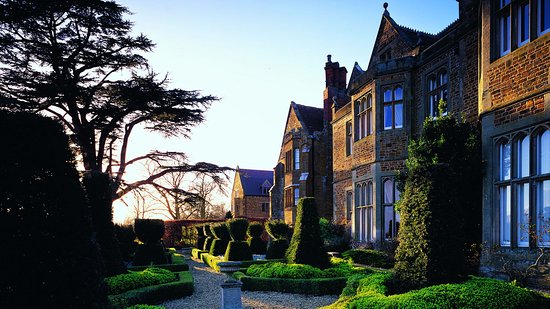
Fawsley Hall's paranormal reputation centres on a single recurring apparition: an elegant woman dressed in Tudor clothing who appears in the oldest parts of the house. Witnesses describe a full-figure apparition, clearly visible and distinctly female, wearing period dress consistent with 16th-century fashion. The ghost appears most frequently in the Tudor Great Hall, the oldest and most architecturally significant space in the building, and in the corridors and rooms that bear Elizabeth I's name.
The sightings follow a consistent pattern. The figure appears briefly, fully formed and visible to the witness, before vanishing. There are no reports of interaction with observers, no speech, no acknowledgment of the living. The Tudor lady simply manifests, remains visible for seconds, then disappears. This behaviour classifies her as a residual haunting, an echo or imprint rather than an interactive spirit.
Guests and visitors report the encounters with remarkable similarity. The woman's clothing draws immediate attention: the formal dress of a Tudor noblewoman, complete with the structured bodices and voluminous skirts of the Elizabethan period. Her bearing suggests someone of high status, her movement graceful and purposeful rather than aimless wandering.
The geographic specificity of the sightings strengthens the case for a genuine haunting phenomenon. The Tudor Great Hall, where the majority of encounters occur, dates to the earliest period of the house's construction. The rooms named after Elizabeth I occupy areas of the building associated with the 1575 royal visit. The ghost confines herself to spaces with direct Tudor connections, never straying into the Georgian or Victorian portions of the property. This pattern suggests a spirit bound to the house as it existed during her lifetime, unaware of or unable to access later additions.
Beyond visual manifestations, visitors report feelings of unease in the historic rooms. Some describe the sensation of being watched, a prickling awareness of another presence even when the apparition remains invisible. These experiences cluster in the same locations where the Tudor lady appears, reinforcing the connection between the visual haunting and the atmospheric disturbances.
The first documented accounts of the Tudor lady date to the hotel's modern operation, though local tradition suggests awareness of the ghost predates the 1998 conversion. Staff members working late shifts in the Tudor Great Hall have reported the most detailed encounters. One account describes a member of the housekeeping staff entering the hall in the early morning to begin preparations for the day. The woman noticed a figure standing near the fireplace, facing away from her. Assuming a guest had risen early, she called out a greeting. The figure turned slightly, revealing a profile framed by an elaborate headdress, then simply ceased to exist. The staff member, experienced in the peculiarities of old buildings and not given to fancy, reported the incident to management with considerable reluctance. She described the figure as completely solid and three-dimensional, indistinguishable from a living person until it vanished.
Guests staying in rooms bearing the Elizabeth connection have provided additional testimony. One couple, occupying a room overlooking the inner courtyard, reported waking simultaneously in the small hours. Both observed a woman standing at the foot of their bed, motionless, her clothing unmistakably historical. The figure remained visible for approximately ten seconds before fading from view. The witnesses, initially alarmed, found themselves curious rather than frightened. They noted the woman's expression: calm, perhaps slightly melancholic, with no apparent awareness of the modern observers she faced.
The corridors connecting the Tudor portions of the building generate their own accounts. A guest walking from the bar to his room late one evening encountered the figure directly. She appeared at the far end of the passage, walking toward him with measured steps. He pressed himself against the wall to allow her to pass, a gesture of instinctive courtesy. As she drew level with his position, she simply vanished, leaving him alone in the hallway with the scent of aged fabric and wood dust.
Staff have documented patterns in the sightings. The apparition appears more frequently in autumn and winter, during the darker months when the hotel's Tudor character feels most pronounced. She favours the hours between dusk and dawn, rarely manifesting during daylight. Renovations and restorations seem to trigger increased activity, a phenomenon common to haunted buildings undergoing physical change.
The most recent corroborated sighting occurred during a wedding reception in the Great Hall. Multiple guests observed a woman in period dress standing at the gallery level, watching the celebration below. Assuming she was part of an entertainment arranged by the wedding party, no one raised alarm. When enquiries confirmed no such performer had been hired, and when the figure failed to appear in photographs taken during her observed presence, the wedding party reluctantly concluded they had witnessed Fawsley's resident ghost.