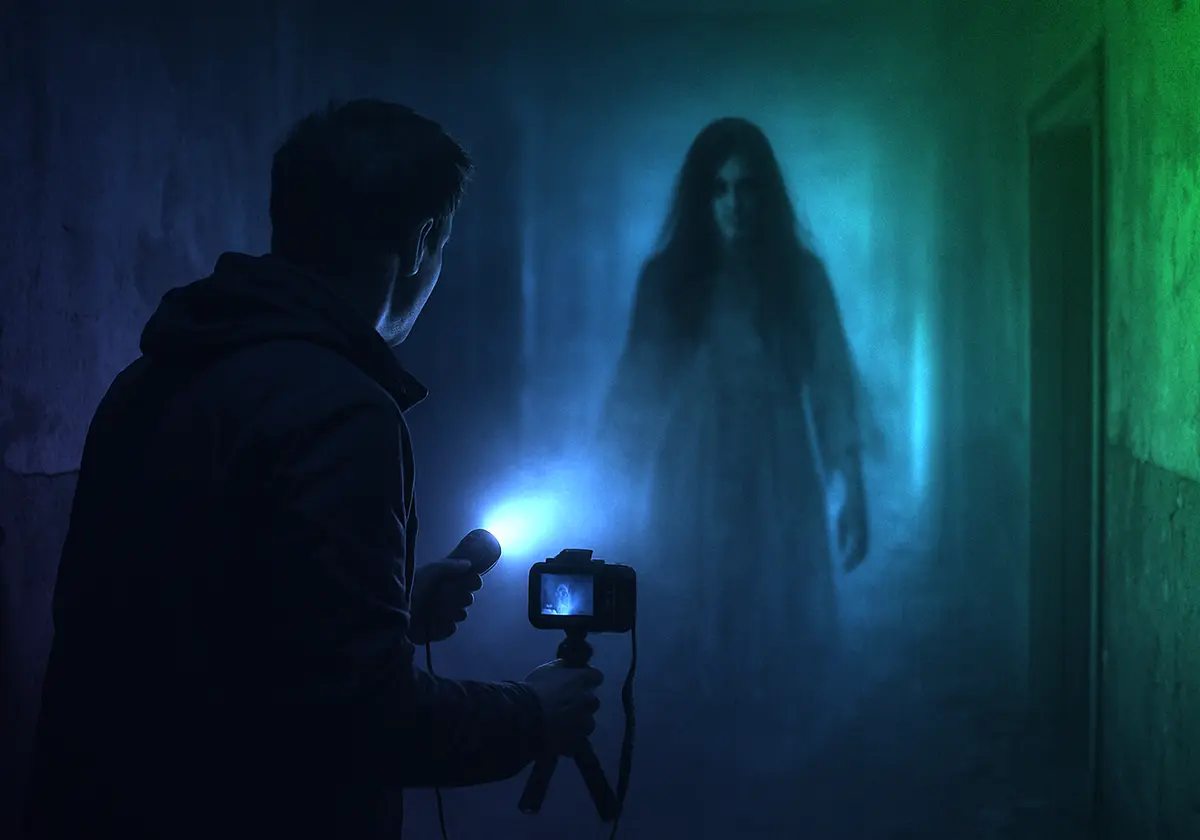
Ghost Hunting Ethics: The Dos and Don’ts of a Paranormal Investigation
Introduction
Modern ghost hunting mixes folklore, local history, consumer electronics and pop culture performance. Videos of flashing devices and whispered “Did you hear that?” moments can tempt newcomers to chase spectacle, sometimes at the expense of safety, consent, accuracy, and respect for people (living or deceased) and place. Ethical practice anchors the field: it reduces harm, improves credibility, minimises false positives, and preserves access to locations for future researchers. While no widely enforced universal code exists, converging principles from archaeological fieldwork, documentary practice, citizen science, psychological research ethics and heritage stewardship offer a sensible foundation.
This guide sets out a pragmatic, evidence-aware ethical framework: what constitutes informed consent, why baseline documentation matters, how to avoid contaminating audio or EMF readings, how to treat alleged spirits respectfully without encouraging theatrical provocation, and where sceptical discipline prevents self-deception. It balances believer interpretations (spirit communication, residual energy) with critical method (cognitive bias, environmental causes). The aim is not to police belief but to raise practice quality, public trust, and personal wellbeing. We outline key dos and don’ts, risk factors, responsible use of equipment, proper data handling, cultural sensitivity and de-escalation strategies when sessions become emotionally charged.
Basic Definition and Overview
Ethical ghost hunting refers to conducting paranormal investigations in a way that protects participants, property, historical context, local communities, animals, and the integrity of any collected data, while maintaining honesty about limitations. It extends beyond simple safety (torches, footwear) into moral choices: seeking permission, not inventing evidence, respecting trauma sites, providing truthful context to viewers, and avoiding psychological harm.
Core pillars usually include:
- Consent & Access: Verifiable permission from property owners / custodians; clarity on permitted areas and times.
- Safety & Risk Mitigation: Hazard assessment (structural weaknesses, air quality, trip risks), appropriate illumination, first aid readiness.
- Respect & Sensitivity: Avoid exploitative framing of tragic deaths; no mocking of cultural or religious beliefs; careful handling of human remains references.
- Evidence Integrity: Honest logging, clear differentiation between raw data and interpretation, no editing that changes meaning, retention of original files.
- Transparency & Limits: Open acknowledgement that equipment measures environmental variables not “spirits” directly; avoiding overstated claims.
- Non-Provocation Principle: Discouraging aggressive or antagonistic taunts which raise participant anxiety and distort environment (shouting, banging, stomping).
- Privacy: Protecting personal data (home addresses, private artefacts, resident identities) unless explicitly approved.
- Wellbeing & Aftercare: Decompression discussion after intense sessions; signposting support if someone becomes distressed.
Historical context: Early psychical researchers (late 19th / early 20th centuries) emphasised controlled observation in private homes, often negotiating delicate family situations around grief or anomalous experiences. Mid-to-late 20th century media shifted focus toward dramatic confrontation. Contemporary ethical emphasis attempts to realign with careful documentation—acknowledging both cultural storytelling and investigative duty.
Scientific and Sceptical Perspectives
From a sceptical standpoint, ethical guidelines function chiefly as quality controls that prevent well-known error sources from masquerading as anomalies. Key scientific considerations:
- Cognitive Bias: Expectation, confirmation bias, apophenia and pareidolia cause pattern detection in random noise (audio static, radio sweeps). Ethical reporting distinguishes ambiguous impressions from demonstrable patterns and resists embellishment.
- Environmental Contamination: Unlogged human movement, phone notifications, walkie talkies, loose electrical wiring, fluctuating Wi-Fi signals and mains hum all generate sensor changes mistaken for paranormal. Ethical method demands baselines, tagging of noises, and distance between devices to reduce cross interference.
- Equipment Limitations: EMF meters capture field strength without source classification; spirit boxes output lexical fragments by design; thermal cameras display surface differentials subject to emissivity errors. Presenting these outputs as definitive communication confuses the public. Ethical clarity means stating what data shows (a transient EMF increase at location X) versus what is conjecture (possible interaction).
- Data Integrity & Reproducibility: Retaining raw, timestamped logs allows third-party review. Over-compression of audio, selective clipping, or layering dramatic filters distorts potential evidence. Ethical practice mirrors citizen science: make methods explicit, preserve original files, and log conditions.
- Psychological Risk: Dark, suggestive settings under fatigue can induce misperception (shadows, peripheral vision glitches). Ethical approach moderates environmental priming (not plunging participants into unnecessary total darkness) so perception remains reliable.
- False Causation Chains: Simultaneous environmental fluctuations (draft + EMF spike + subjective chills) can share a mundane root (opening door, HVAC cycling). Ethical interpretation avoids “stacking” unrelated coincidences into singular paranormal narratives without ruled-out alternatives.
Scientific-minded investigators view ethics as a filter that elevates evidential quality. If protocols reduce known artefacts and an anomaly persists, it gains proportional interest. Without front-loaded rigour, anomalies remain uninterpretable.
Believer and Experiencer Perspectives
Believers often frame ethical ghost hunting as respectful interaction with conscious entities (spirits of the deceased, residual imprints, other intelligences). Ethical tenets emphasised include:
- Respectful Address: Polite speech, introductions, contextual explanation of intent (“We would like to understand your story”) mirroring living interpersonal courtesy.
- Context Sensitivity: Acknowledging site history (battlefield, hospital, domestic tragedy) without sensationalising suffering. Avoiding reenactment of traumatic events as bait.
- Non-Coercive Invitation: Requesting, not demanding, responses or object manipulation.
- Protective Practices: Grounding, visualisation, prayer or cleansing rituals used to foster psychological safety and a sense of boundary.
- Emotional Responsiveness: If a participant becomes overwhelmed (fear, sadness), pausing rather than pressing forward for “evidence” of oppression.
Some traditions incorporate offering gestures (lighting a candle, moment of silence) as ethical acknowledgement. While sceptics view such practices as placebo comfort, they can stabilise group mood and enhance mindful listening. Believer communities frequently criticise confrontational television portrayals (shouting challenges, provocation of alleged negative entities) as ethically hollow and methodologically counterproductive—arguing they inflame fear narratives, risk fabricating phenomena through noise and movement, and disrespect potentially conscious presences.
Ethical believer frameworks also caution against over-attachment: refraining from imposing a single interpretive identity (“This is definitely the murdered maid”) when historical evidence is sparse, thus avoiding identity misattribution to ambiguous experiences.
Research and Evidence Analysis
Formal peer reviewed research specifically codifying ghost hunting ethics is limited; however, adjacent fields provide transferable standards:
- Archaeology / Heritage Management: Emphasises minimal site impact, documentation accuracy, context preservation, permission hierarchies. Investigators can adapt: no moving artefacts for dramatic staging, no defacing surfaces with talc or tape where prohibited.
- Psychology & Human Subjects Research: Informed consent, right to withdraw, minimisation of distress, confidentiality. Applied: participants briefed on potential emotional content and free to stop without pressure.
- Forensic Audio / Data Handling: Chain of custody, retention of originals, avoiding destructive editing. Applied: maintain original audio files, label enhanced copies clearly.
- Citizen Science Protocols: Transparent methods, repeatability. Applied: publicly share basic methodology (equipment list, sampling intervals, environmental conditions) if evidence is published online.
- Media Ethics: Avoid deception, correct misrepresentation, disclose uncertainty. Applied: disclaimers clarifying speculative nature of interpretations.
Emerging community-led codes (discussion forums, investigative associations) typically converge on: permission, safety, honesty, and non-exploitation of tragedies for clicks. While not formally standardised, these patterns indicate shared ethical evolution. Integrating structured logging (time-synchronised audio and environmental readings) has been recommended to reduce interpretive drift, though adoption varies due to resource constraints.
Limitations: Lack of central authority means inconsistent enforcement; social media reward structures (sensational thumbnails, dramatic titles) can incentivise boundary-pushing behaviour. Ethical literacy attempts to counterbalance those incentives with reputational capital rooted in transparency.
Practical Information
If you plan or join an investigation, embed these actionable steps:
- Obtain Documented Permission: Email or written agreement listing dates, areas, restrictions (candles, ladders, audience size). Keep a copy onsite.
- Pre-Visit Risk Survey: Daylight walk-through: note loose boards, low beams, stair integrity, presence of mould, animal nests, CCTV locations (privacy implications).
- Baseline Environmental Logging: Before “calling out”, record 10–15 minutes of stillness capturing ambient EMF, temperature, audio. This supplies control comparison.
- Structured Team Roles: Lead investigator (coordinates timing), safety officer (monitors hazards, breaks), logger (writes time-coded events), equipment tech (battery status, placement checks). Rotating roles reduces fatigue.
- Tag Everything Verbally: Coughs, chair shifts, distant traffic, stomach growls. It dramatically lowers misattribution in later review.
- Limit Session Lengths: Short, focused windows (10–20 minutes) with breaks maintain cognitive clarity; avoid drift into suggestion-heavy fatigue.
- Respect Quiet Hours: Nearby residents or wildlife should not be disturbed by shouting, door slamming, or amplified radio sweep noise late at night.
- Debrief & Aftercare: Post-session reflection: what seemed anomalous, what had mundane explanation, emotional check-ins, plan for evidence review timetable.
- Evidence Review Separation: Review audio / video days later when rested; initial excitement can bias interpretation.
- Document Null Results: Log sessions where nothing occurred; absence data counters selective memory inflation of anomaly frequency.
Seek professional help (electrician, structural engineer, mental health professional, wildlife control) when issues exceed lay competence: exposed wiring, collapsing ceilings, persistent distress, discovery of protected species.
Risk Assessment
Primary risk domains:
- Physical: Darkness, uneven floors, trip hazards, unsecured wiring, low oxygen in sealed cellars. Mitigation: adequate lighting (use diffused low-level rather than total black), closed-toe footwear, no solo wandering.
- Psychological: Anxiety spirals, panic, sleep disturbance, suggestibility, post-investigation rumination. Mitigation: informed briefing, breaks, critical framing, supportive debrief.
- Legal / Property: Trespass charges, damage liability, breach of contract terms. Mitigation: documented permission, adherence to restricted zones, insurance where appropriate.
- Data Integrity: Lost raw files, overwritten recordings, ambiguous time stamps. Mitigation: duplicate storage, consistent file naming (YYYYMMDD_location_device.wav), synchronised clocks.
- Reputational: Posting mislabelled or exaggerated content invites public scepticism and erodes trust. Mitigation: accuracy, disclaimers, prompt corrections if errors found.
- Ethical Harm to Communities: Sensationalising a recent death site causing distress to relatives. Mitigation: temporal sensitivity, anonymising private residences unless owners opt in.
Overall safety level: Medium—environments are often low light with minor structural hazards and psychological triggers; most risks manageable with planning.
Ethical Principles (Core Framework)
- Honesty: Represent observations faithfully; clearly separate raw data from interpretation or belief.
- Respect: For property, history, potential deceased identities, living stakeholders.
- Non-Maleficence: Avoid actions increasing risk (provocation shouting, disabling safety lighting) for novelty.
- Accountability: Maintain logs enabling scrutiny; acknowledge mistakes publicly and correct them.
- Stewardship: Leave site as found; avoid chemical powders, excessive tape, or intrusive markers in heritage locations.
- Inclusion & Consent: Ensure all team members understand process and can withdraw freely.
- Transparency About Limitations: Publicly clarify that instruments do not prove consciousness interaction.
The Core Dos
- Do secure written permission and clarify boundaries.
- Do research historical context using reputable sources; avoid repeating unverified legends as fact.
- Do perform a health and safety walk-through; remove obvious trip hazards where allowed.
- Do calibrate or at least function-test equipment before and after sessions.
- Do log start / stop times, personnel present, environmental changes (doors opened, heating cycles).
- Do maintain respectful tone; speak as if addressing a living witness.
- Do duplicate raw data storage immediately after the session.
- Do provide content warnings if discussing traumatic events in public outputs.
- Do anonymise personal addresses or sensitive items unless consent granted.
- Do disclose methods (devices used, baseline durations) when publishing evidence claims.
The Core Don’ts
- Don’t trespass or rely on “It’s abandoned so it’s fine” justification.
- Don’t fabricate, loop or overdub sounds to create drama.
- Don’t provoke with insults, shouting or physical damage for a reaction.
- Don’t switch all lights off purely for atmosphere if it compromises safe movement.
- Don’t handle or move historical artefacts to reposition for camera framing without explicit permission.
- Don’t claim equipment proves a ghost; state what was measured.
- Don’t ignore participant distress signals for the sake of capturing more footage.
- Don’t publish private owners’ personal items, photos, documents without consent.
- Don’t share raw location of vulnerable sites (unprotected graveyards, fragile ruins) encouraging vandalism.
- Don’t cherry pick only anomalous clips; mention control segments to contextualise rarity.
Consent and Property Access
Consent is not a single yes—it’s a negotiated scope. Clarify:
- Areas accessible / off limits.
- Permitted times (noise curfews, alarm systems).
- Acceptable equipment (no candles? no fog machines?).
- Media usage rights (can footage be monetised, can owners review before publication?).
- Insurance or liability expectations.
Maintain a concise written agreement; share with team beforehand. If conditions change (unexpected structural hazard), pause and re-evaluate rather than press on.
Data Integrity and Documentation
Establish a consistent structure:
- File Naming:
20250903_location_room_audio01.wavfor raw audio;20250903_location_room_emf.csvfor logged meter readings if using data logger. - Metadata Log: Plain text or spreadsheet with columns (timestamp, event, device, environmental note, interpretation). Keep interpretation separate to allow later re-analysis.
- Chain of Custody: Record who copies, edits, or enhances files. Mark derived versions with suffix
_processed. - Annotation Discipline: During review, add comments rather than altering originals.
Ethically, if you publicly release a claim (“whisper at 00:12:14”), provide context snippet plus at least several seconds before and after to reduce selective framing.
Respect for History, Culture and the Deceased
- Avoid turning recent tragedies into entertainment; allow time and community consultation.
- Use precise language: “Reportedly associated with” rather than asserting unverified legends.
- Acknowledge indigenous, local, or minority heritage narratives respectfully; avoid cultural appropriation of protective rituals without understanding or permission.
- Provide educational value: integrate verified historical facts rather than only mythic embellishment.
Environmental and Wildlife Considerations
- Minimise noise pollution, especially in rural or ecologically sensitive areas (bat roosts, nesting birds).
- Avoid bright white light bursts repeatedly in habitats with nocturnal species; use diffused red light where needed.
- Pack out all waste (battery wrappers, snack packaging) and consider rechargeable cells to reduce landfill.
- Do not deploy talcum powder or flour on historical floors (abrasive, contaminating). Use non-invasive laser grids instead.
Media Sharing and Public Communication
- Add disclaimers on uploads: equipment limitations, subjective nature of interpretations.
- Caption potential anomalies neutrally (“unidentified sound”) rather than conclusively (“spirit voice”).
- Credit property owners when permitted; blur personal photographs or certificates captured inadvertently.
- Respond to public critique constructively; provide method clarification rather than defensive sensationalism.
Investigator Wellbeing and Psychological Hygiene
- Encourage adequate sleep pre-investigation; fatigue amplifies hallucination risk and poor judgement.
- Use rotation to prevent sensory overload (staring into darkness for hours strains perception).
- After intense sessions, re-normalise: bright light, warm drink, grounded conversation.
- Differentiate personal emotional processing from site narrative; journaling helps externalise rather than internalise fear imagery.
- Normalise null results—ethical practice is not validated by constant anomalies.
Safety Equipment and Tools (Ethical Use)
Essential items: reliable torch with spare batteries, first aid kit, CO₂ / air quality awareness (in enclosed basements), communication devices (fully charged mobile), notebook, and suitable footwear. Optional: high visibility markers (non-permanent) to flag hazards. Ethical use of paranormal tools includes not overloading an area with unnecessary gadgets creating mutual interference and false positives. Where possible use at least one environmental control sensor positioned away from the active session to compare background variation.
Emergency Procedures
- Medical Incident: Cease investigation; provide first aid within competency; call emergency services if needed.
- Structural Hazard Discovery: Evacuate affected zone; inform owner; do not improvise repairs beyond skill level.
- Fire Risk: Extinguish candles (if allowed) before moving to another floor; have clear egress path kept uncluttered.
- Severe Distress / Panic Attack: Guide person to lit, quiet area; slow breathing exercises; end their participation for the night; do not reintroduce triggering stimuli.
When to Seek Professional Help
- Persistent anxiety, sleep disruption, intrusive auditory phenomena post-investigation.
- Compulsive revisiting of location despite deteriorating emotional state.
- Discovery of potential human remains or protected artefacts (alert authorities / heritage bodies; cease disturbance).
- Electrical hazards (sparking fuse boxes, persistent shocks) require qualified electrician—not experimental probing.
Conclusion and Current Understanding
Ethical ghost hunting is less about restrictive red tape and more about elevating investigative value while minimising harm. A well-structured, respectful investigation protects participants, preserves sites, produces cleaner data and fosters public confidence. Scientific scrutiny and believer respect can co-exist: clear baselines, transparent logging and honest limitations sit alongside courteous address and space for experiential meaning. No consumer device currently verifies survival of consciousness; ethical framing acknowledges this while still permitting exploratory inquiry. Future development (better multi-sensor data logging, open datasets, interdisciplinary collaboration) may refine standards further, but foundational principles—consent, safety, respect, integrity—are stable anchors. Adopting them now enhances credibility and ensures that if a genuinely unusual event is recorded, it stands on a bedrock of disciplined method rather than spectacle-driven chaos.
Internal linking suggestions: Link references to EMF meters, EVP, spirit boxes, poltergeist activity and equipment basics to existing explainers (e.g. beginners-guide-ghost-hunting-equipment, evp-electronic-voice-phenomena, what-is-a-poltergeist-understanding-noisy-ghosts, how-to-use-a-ouija-board-safely-rules-and-myths). Add contextual links from location pages to this ethics guide where protocol or safety disclaimers are relevant.