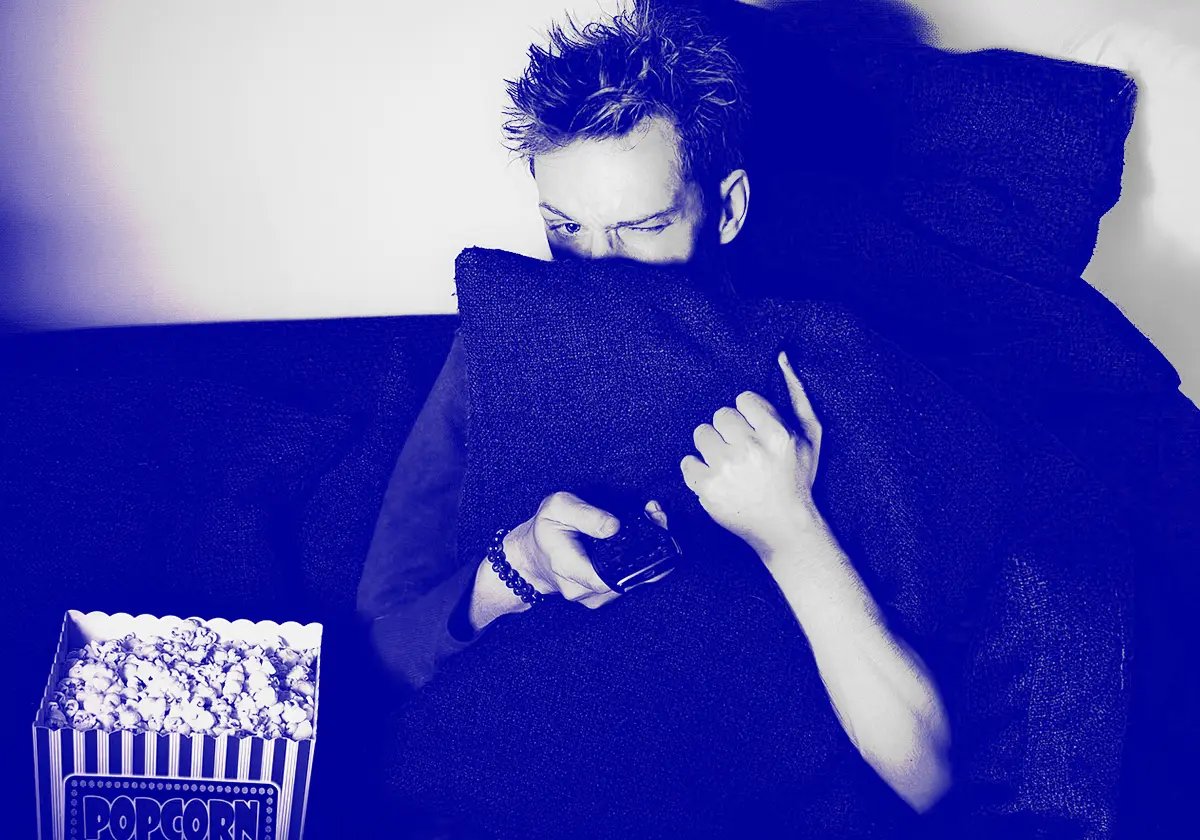
The Science of Fear: Why Do We Love to Be Scared?
Introduction
Why do people pay to walk into dark corridors, queue for horror films, stream true haunting documentaries at night, or explore allegedly haunted hotels when a comfortable sofa is available. Fear should repel us. Yet controlled fear based entertainment thrives. People seek jump scares, tension, eerie atmospheres and unsettling stories while knowing they are physically safe. This paradox sits at the heart of recreational fear. Understanding it requires biology, psychology, cultural history and even belief oriented perspectives about the unseen.
This article explains what fear is in the body and brain, how it differs from anxiety, why controlled scares can feel pleasurable, how horror media manipulates innate responses, and how believers in the paranormal frame intense fear experiences as meaningful contact with other realms. We also examine sceptical interpretations grounded in evolutionary theory, learning, and reward neuroscience. Finally we outline safe ways to engage with fear experiences without overwhelming your nervous system.
Throughout we separate established mechanisms (like the autonomic cascade) from hypotheses (such as why some individuals become sensation seekers). We avoid fabricated statistics. Where research exists but details vary we use careful language such as researchers propose or studies indicate. By the end you should understand fear as a coordinated adaptive system that can, in the right context, become a form of play and self regulation rather than purely a signal to retreat.
Basic Definition and Overview
Fear is an immediate adaptive emotional and physiological response to a perceived threat. It prepares the organism to act. Core bodily changes form the classic fight, flight or freeze pattern: increased heart rate, quicker breathing, redirected blood flow toward muscles, shifts in digestive activity, heightened sensory vigilance and narrowing of attentional focus. These changes are mediated by rapid subcortical circuits and slower cortical appraisal processes.
Key components often referenced in scientific literature include:
- Sensory intake: visual, auditory, tactile, olfactory cues enter thalamic relay stations.
- Rapid route: signals pass quickly to the amygdala enabling a fast protective response before conscious analysis finishes.
- Slower route: parallel processing through cortical regions allows contextual evaluation and potential inhibition if the stimulus proves harmless.
- Autonomic activation: sympathetic nervous system triggers adrenal medulla release of adrenaline (epinephrine) and noradrenaline supporting immediate action.
- Hormonal modulation: the hypothalamic pituitary adrenal (HPA) axis may release cortisol during sustained or unresolved threat contexts, influencing energy mobilisation and memory consolidation.
Fear differs from anxiety. Fear is acute and linked to a specific stimulus or context, such as a loud unexpected bang. Anxiety is more diffuse, anticipatory and often objectless. Startle is a hyper rapid reflex muscular contraction to sudden stimuli that can feed into a broader fear response when interpreted cognitively. Thrill is an affective blend where fear elements are partly buffered by safety appraisal, creating a mixed hedonic state. Relief is the rewarding afterglow when a threat ends or is revealed to be safe.
Human cultures have long ritualised fear: storytelling by firelight, seasonal rites, folklore about ghosts, and cautionary legends. These practices allow controlled rehearsal of danger scenarios, social bonding and moral teaching while containing risk. In modern contexts horror films, haunted attractions, escape rooms, supernatural themed games and paranormal tourism fill similar roles. They provide a structured laboratory for emotional regulation and social signalling: I endured this, I can handle arousal, I belong to this group.
Scientific and Sceptical Perspectives
Evolutionary Framing
From an evolutionary standpoint fear systems confer survival advantage by prioritising rapid defensive behaviour. Natural selection favoured circuits that evaluate potential threat signals (sudden movement, looming shapes, darkness, unfamiliar sounds). False positives, such as reacting to a rustle that proves wind, are less costly than false negatives, such as ignoring a predator. This bias helps explain why ambiguous stimuli in dim light can feel ominous and why horror media exploits shadow, silence and near silence, and peripheral suggestion.
Neurobiological Mechanisms
Research by neuroscientists has mapped key structures involved in conditioned and unconditioned fear responses. The amygdala coordinates threat appraisal and initiates downstream autonomic and hormonal cascades. The hippocampus provides contextual memory allowing discrimination between safe and dangerous settings. The prefrontal cortex can inhibit or modulate amygdala outputs when cognitive appraisal concludes safety. Brainstem nuclei and the periaqueductal grey contribute to freezing and defensive posture organisation. Neurotransmitters and neuromodulators including glutamate, GABA, noradrenaline, dopamine, serotonin and endogenous opioids each shape aspects of arousal, vigilance, learning, and eventual relief.
Reward, Relief and Mixed Hedonics
Why can fear feel good. One explanation emphasises contrast and resolution. A surge of arousal followed by a rapid safety confirmation yields a rewarding rebound mediated partly by dopamine pathways and endorphin release. The body interprets absence of actual injury plus elevated arousal as a form of achievement. Controlled fear becomes a loop: anticipatory tension, peak, resolution, reflective meaning making. Some researchers discuss benign masochism, where individuals enjoy negative sensations that remain within a safely bounded context. The body signals intensity while the mind knows there is no real existential risk.
Learning and Conditioning
Fear conditioning associates a neutral cue with an aversive outcome, shaping future responses. In recreational fear contexts the audience tacitly learns predictive patterns used by horror creators (rising strings, camera angle changes, quiet space before a jump). Mastery of these patterns creates meta enjoyment: a viewer anticipates the scare, endures it, and confirms predictive skill. Extinction mechanisms also operate: repeated non harmful exposure to fear cues can reduce baseline reactivity. Controlled self dosing of fear may therefore function as informal exposure training for some individuals improving emotion regulation.
Individual Differences
Sensation seeking traits influence tolerance and attraction to intense experiences. People with higher sensation seeking often report diminished baseline fear reactivity or quicker recovery. Others with heightened anxiety sensitivity may find the same stimuli overwhelming. Genetic, developmental and environmental factors all contribute. Sleep quality, nutrition, prior stress load and social context modulate a given session’s response amplitude. This variability explains why a single haunted attraction yields laughter for one visitor and genuine distress for another.
Parasocial and Cognitive Safety Frames
Knowing one is in a cinema or themed event creates a cognitive safety frame. Distance, symbolic markers (ticket, queue, set design) and social presence of friends all reinforce that real danger is absent. This frame allows deep immersion without full defensive mobilisation. If that frame cracks (unexpected real emergency, panic in crowd) experiences quickly shift from thrilling to traumatic risk oriented responses.
Sceptical Clarifications
Enjoyment of controlled fear does not require positing supernatural energy feeding mechanisms. Cognitive appraisal, neurochemical rebound and social signalling sufficiently explain many features. Claims that electromagnetic fluctuations or spirit influence create enjoyable chills are viewed by sceptical commentators as interpretive overlays on normal physiology and learned cultural scripts. Chills, goosebumps and hair standing are normal piloerection responses to emotional salience, cold, or auditory frisson and do not inherently indicate external presence.
Believer and Experiencer Perspectives
Within paranormal contexts fear is often conceptualised as more than physiology. Many experiencers describe fear spikes as signalling an unseen presence. In allegedly haunted locations a sudden heavy atmosphere, cold spot or intuitive dread may be framed as sensitive perception of an entity. Believers sometimes argue that human emotional energy attracts or fuels interactions, proposing that heightened fear intensity opens a channel for manifestation. These ideas are theoretical and not validated within mainstream physiology yet they persist due to personal testimony and perceived patterns in anecdotal case logs.
Some investigators differentiate types of fear feelings: a sharp alarm that encourages immediate exit contrasted with a low pulsing unease they interpret as neutral observation. Practices like grounding, protective visualisation, or spoken boundary setting are used by believers to manage perceived energies while continuing investigation. Others treat fear as a diagnostic tool, holding that genuine negative phenomena feel qualitatively different from ordinary startle or structural noises. Sceptics counter that cognitive expectation, priming, environmental cues like sub audible infrasound, mould odours, high carbon dioxide or lighting irregularities can all mimic or amplify dread.
Cultural rituals worldwide have used fear experiences to produce bonding and meaning. Night vigils, initiation passages through dark spaces, storytelling of spirits and moral cautionary entities serve social cohesion. Modern haunted attractions and paranormal tourism replicate archetypal patterns: controlled passage through liminal darkness, symbolic confrontation, collective survival and joyful release. Believer narratives integrate these experiences into a worldview where fear reveals layered reality rather than simply triggering a defence cascade.
Individuals sometimes report transformation after confronting fear in safe frameworks. They describe increased confidence, reduced general anxiety and heightened curiosity. Believers may attribute growth to spiritual resilience gained during contact. Psychologists interpret changes as cognitive reappraisal practice and mastery of arousal regulation. Both perspectives acknowledge that reframing intense but safe fear exposures can support personal development when approached thoughtfully.
Research and Evidence Analysis
Laboratory research on fear has robustly characterised core conditioning pathways, startle modulation and extinction processes using animal models and human experiments with ethical constraints. Neuroimaging studies have observed activation patterns in limbic and cortical regions during anticipation, threat onset and resolution. These studies support models where rapid subcortical detection is followed by cortical modulation and memory integration.
The applied question of why people enjoy horror and controlled fear experiences draws on interdisciplinary research in media psychology, affective neuroscience and cultural studies. Scholars investigating recreational fear propose adaptive learning benefits: calibrating threat responses in a safe sandbox, practising prediction and emotional down regulation. Others focus on social bonding gains. Sharing intense arousal can increase group cohesion through synchronised physiological rhythms and collective narrative building after the event. Reports of heart rate synchrony in group viewing contexts illustrate principles though comprehensive field datasets remain limited.
Theories referencing benign masochism suggest enjoyment occurs when negative sensations are reinterpreted as safe within a larger metacognitive frame. Sensation seeking research points to baseline differences in catecholamine system reactivity or reward valuation though exact mechanisms are still under exploration. Studies on misattribution of arousal indicate that physiological activation may be retrospectively labelled depending on contextual cues, helping explain why the same racing heart can be interpreted as panic or excitement.
Some researchers have examined environmental contributions to uncanny sensations. Low frequency infrasound around certain structural features can induce unease or mild disorientation in some individuals. Lighting flicker, carbon dioxide concentration, thermal gradients and irregular electromagnetic fields in older buildings may affect comfort and perception. These lines of investigation provide plausible naturalistic layers to experiences in reputed haunted venues without requiring non physical agencies.
Paranormal oriented literature compiles case narratives where intense fear correlates with claimed anomalous events such as object movement or electronic anomalies. Documentation quality varies widely, often relying on testimony rather than instrumentally verified correlations between physiological arousal and external physical changes. Without controlled comparative baselines it is difficult to derive causal direction. Are people scared because subtle environmental factors shift, because of prior suggestion, or because a distinct external anomaly occurs. Present evidence does not allow firm resolution. Rigorous future work would need synchronised physiological monitoring (heart rate variability, galvanic skin response), environmental logging and blind rating of events to clarify patterns.
Overall the evidence base strongly supports core biological mechanisms of fear and moderately supports psychological models of controlled fear enjoyment. Evidence for paranormal modulation of fear remains anecdotal. Absence of confirmation does not automatically disprove claims but warrants careful methodological scrutiny before elevating hypotheses.
Practical Information
Using Controlled Fear Constructively
- Pace exposure: start with mild suspense media before high intensity content.
- Track your responses: note heart rate sensations, tension, post experience mood. This builds interoceptive literacy.
- Pair with regulation: slow exhale breathing (longer exhale than inhale) after peaks supports parasympathetic rebound.
- Diversify context: alternate intense scenes with neutral conversation to prevent cumulative overload.
Safety Considerations
- Do not force participation in horror or haunted activities for someone showing signs of distress (shaking, hyperventilation, dissociation).
- Avoid intense fear stimuli when severely sleep deprived or under the influence of substances that already elevate arousal.
- If a fear experience triggers persistent intrusive memories or functional impairment seek professional clinical guidance.
- Use accessible exits in physical attractions. Respect venue safety briefings and capacity limits.
Distinguishing Enjoyable Fear from Harmful Distress
Markers of adaptive recreational fear include quick recovery, laughter, curiosity and positive post event mood. Red flags include lingering dread, nightmares, avoidance of ordinary settings, and heightened baseline startle for days. If negative outcomes persist, moderate or suspend exposure and prioritise grounding practices (steady breathing, sensory focus, daylight activity, balanced nutrition, adequate sleep).
Investigating Paranormal Fear Claims Responsibly
- Establish environmental baselines (temperature, ventilation, light levels) before subjective interpretation.
- Log events objectively separating description from interpretation.
- Avoid escalating emotional provocation which can increase anxiety without evidential gain.
- Respect participants’ psychological limits and informed consent.
When to Seek Help
Professional support is appropriate if fear responses generalise to benign daily contexts, if panic attacks emerge, or if a person begins to self isolate to avoid triggers. Early intervention can prevent consolidation of maladaptive avoidance cycles.
Conclusion and Current Understanding
Our attraction to being scared in safe contexts arises from a coordinated interplay of evolved defence systems, cognitive appraisal, reward rebound, social bonding and meaning making. Biological fear circuits are ancient adaptive tools. Modern culture repurposes them into structured play. The brain’s capacity to rapidly evaluate and then down regulate threat allows enjoyment of narrowed focus and adrenaline without enduring harm. Relief, mastery and shared storytelling convert what could be pure aversion into an experience labelled fun, thrilling or even cathartic.
Believer interpretations layer additional significance, framing intense fear episodes in haunted settings as contact with non physical agencies or energetic dynamics. Sceptical frameworks show that environmental, psychological and social mechanisms plausibly account for most features of recreational and location based fear. Present evidence robustly supports conventional models of fear processing and only an anecdotal base for paranormal modulation. Yet the subjective richness of fear experiences ensures both scientific and experiential perspectives continue to explore unanswered questions about how context, culture and physiology converge.
Future research could integrate wearable biosensors, environmental multi spectrum logging and controlled narrative design manipulations to quantify how story structure interacts with physiology and reward. Ethical design will remain crucial to protect participants while advancing understanding. Until then, engaging with controlled fear is best approached as an opportunity to practise emotional regulation, enjoy collective narrative and appreciate the evolutionary heritage of your protective systems without surrendering to sensationalism or dismissiveness.
Key Concepts Recap: fear vs anxiety, amygdala rapid route, reward rebound, benign masochism hypothesis, sensation seeking, cultural ritualisation, believer energy interpretations, environmental confounds, regulation strategies.
Disclaimer: No fabricated statistics are included. Concepts referenced derive from established affective neuroscience, learning theory, and media psychology literature. Readers are encouraged to consult peer reviewed sources and reputable academic texts for deeper technical detail.